INVOLVING MUSIC IN REVIEW | MARIANNE JOYCE AND OLD MOLL AT BARBICAN THEATRE, PLYMOUTH

Oct 2026 by Suki-Mai Renbourn

This post may contain affiliate links.

Involving Music Community

Involving Music’s field contributor community created this review. Their contributions help capture the sound and atmosphere of live shows across the wider South West of England, giving space to genuine fan voices and local perspectives. These pieces sit alongside our Profiles, helping shine a light on the artists shaping the region.

Written & photographed by Suki-Mai Renbourn

A sold-out homecoming, Dartmoor folklore and a Plymouth crowd completely caught up in the music.

Marianne Joyce returned to Plymouth’s Barbican Theatre for her first headline show, back in the room where she first performed at an open mic.

Alongside the absorbing storytelling of Old Moll, it became a night of Dartmoor folklore, enormous singalongs and the kind of audience connection that makes a small venue feel much bigger than its walls.

Involving Music Field Contributor Suki Renbourn was there to capture what happened.

Old Moll

Dartmoor folklore, women’s stories and a room held completely still.

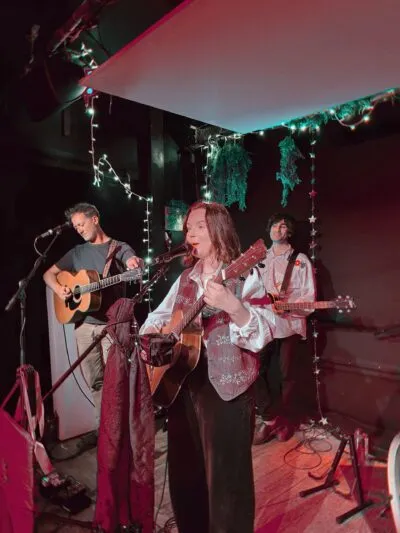
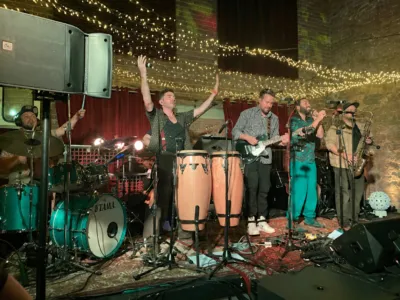
The gig room is small and dark, with fairy lights catching on the instruments and illuminating parts of the room through the shadows. The space is cosy and cave-like, tucked away from the rest of the building, while conversation from the bar and entrance drifts in and adds to the atmosphere, and the audience gradually settles in to listen.

The room is packed, with people standing close together and giving Old Moll their full attention. The audience sways slowly through the songs, listening carefully. By the end of the set, I’m standing right by the stage and have no intention of moving. It’s like a spell has been cast over us all, right in the heart of Plymouth’s most historic part.

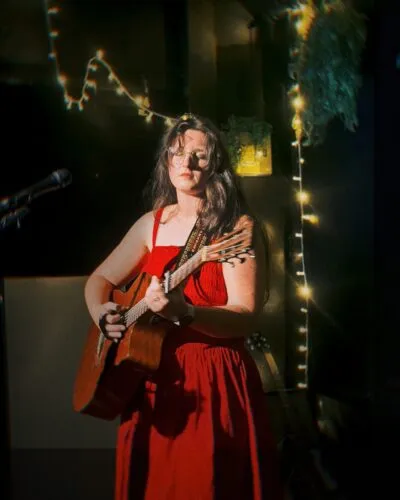
Old Moll comes onto the stage dressed in red, with her long black hair cascading down and around her fair face. She has the aura of an old soul, reflected in the gentle way she speaks and the calm focus she brings to the stage. I really felt her deep connection with her guitar; she played with an instinctive ease, never once looking down at her hands to see what she was doing. Instead, her eyes remained closed, completely absorbed in the music. She is centred, unhurried, and at some points, I wondered if she was only in the room in body. 

Stories of rain, roots, Dartmoor folklore and family history all appear throughout the set. Her voice is warm and honey-like, and her songwriting flickered glimpses of Nick Drake. The songs carry a softness, but the stories within them explore women’s history, folklore, and freedom (or lack thereof). She also performed spoken word segments throughout her set, blended beautifully into the songs – which is extremely rare and not easy to pull off. 

Old Moll’s new EP tells stories of women from history and folklore across thousands of years. When I spoke to her after the show, she explained that she became interested in how stories about women have often been told by men, with the women at their centre losing their voice in the process. Her aim with the EP is to tell those stories from the women’s own perspectives and give them back some of the agency that has been removed from them over time.

‘Silver Hair’ was a particular highlight for me. The song is based on a Dartmoor folk story about a woman who can transform into a hare, letting her run wherever she wants and escape the men trying to capture her. The song stayed in my head all the way home, which I knew it would the second I heard it. The image of a woman disappearing into the Dartmoor landscape carries wonder and danger, but also thrill and inspiration! Oh, to be that hare… The EP travels much further back in history through ‘Venus of Malta’, inspired by a 5,000-year-old statue Old Moll saw in Malta. She recognised her own body in the figure and connected with it deeply. The song explores the theory that the statue could have been a self-portrait made by a woman, rather than the fertility goddess interpretation given to her by the men who discovered her.

‘Winter in the Summer Country’ brings the focus closer to home, honouring women from Old Moll’s own family history. She researched her relatives dating back to the 1700s. She discovered that many of the women had lived difficult lives as servants, balancing domestic labour, work and childcare, and wanted to give their experiences a place in her music. Old Moll is a remarkable storyteller. She has created something deeply moving and powerful, and she is doing justice to the stories of women throughout history.

The show also marked the beginning of Old Moll’s Mothers of Mothers tour, with dates in Newport on 8 October and a headline show in Bristol on 30 October, both with a full band.

Read Old Moll’s Artist Profile →

Marianne Joyce

A sold-out homecoming in the room where it all began.

Marianne Joyce’s gig was a beautiful full-circle moment – performing her first headline show in the place it all began – Barbican Theatre, Plymouth. She first performed there at an open mic event, and was now returning to a full (sold-out!) room, under a powerful Aries full moon.

I managed to wrangle a moment with Marianne between her adoring friends, family and fans. “I’m unbelievably excited to be playing my first headline show,” Marianne told me. “I first performed here at an open mic night; it was my first time performing, and I’m delighted to be back to play these songs to a full crowd!”

Marianne’s audience, just about fitting into the humbly sized gig space, brought plenty of warmth to the room – both from the bodies and souls filling it. Marianne has a hugely loyal support network, and fans told me before the show they were going to try not to cry while she played. Not everyone managed it. They were locked in, singing along to the songs, looking up at Marianne as if she were a shining star.

Which she is, of course. She undoubtedly has the kind of support that will carry her far as an artist.

Her fellow ‘Gulls’ were up on stage alongside her, while the crowd gave her just as much energy from the other side of the room. It created a strong sense of community around the performance, with people there not just to hear the music but to see Marianne succeed.

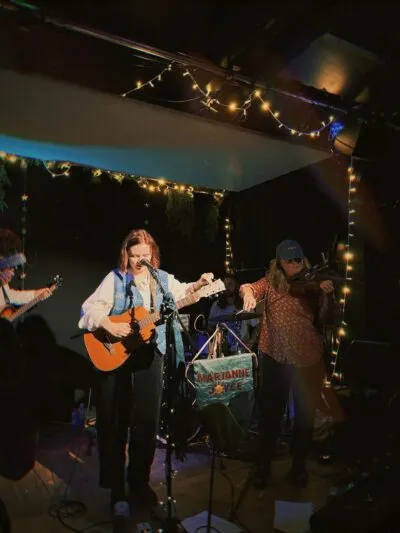
Marianne’s folk music brought a huge amount of life to the Barbican Theatre, with her voice sitting beautifully alongside violin, drums and deep bass. Jon Fazal and Lukas Drinkwater also joined her on stage, adding to the rich instrumentation and giving the songs even more originality and fullness. The music had plenty of depth, and the melodies were timeless, but Marianne’s voice kept the overall atmosphere bright, inviting, shiny and new.

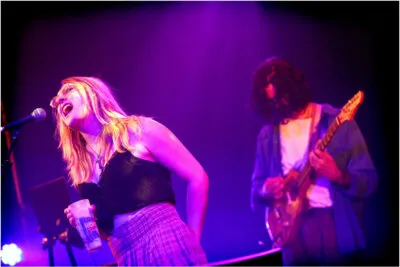
Her personality became an important part of the show too. She was charismatic, funny and relatable, moving easily between songs and conversations with the audience. She encouraged people to get involved and sing along, and the room responded every time, tenfold what she expected. As the set continued, the stage grew livelier, with Marianne leading the audience through songs filled with warmth and optimism.

Marianne told me one of her highlights was hearing how loudly everyone sang along to ‘Victory Lap’, an unreleased song she says is “definitely one for EP #2”. The crowd also reacted to a lyric change at the end of ‘Coffee & Rings’, mentioning it being her first headline show, while her biggest release ‘14%’ produced one of the most wonderfully Plymouth moments of the night: chip forks held in the air like lighters. Did you know that 14% of seagulls are lesbians? You do now. 

Another of the biggest shared singalongs came during ‘Will You Go Lassie Go’, a traditional Scottish folk song. Before starting, Marianne told the audience, “Even if you’re not Scottish or Irish, pretend you are right now,” and everyone happily joined in. Voices filled the room as the audience sang along with her, creating one of the most memorable moments. We have a video up of this on our Involving Music instagram page if you’d like to see.

For Marianne, that shared experience is one of the best things about live music. She told me that she loves how going to a gig can bring people together, particularly at a time when there is so much division around us. With anti-LGBTQ+ rhetoric, attempts to divide people and the growing presence of AI in arts and music, she sees joy as a powerful tool.

Seeing the audience leave with smiles on their faces was, she said, “a lovely antidote to that.” By the end of the night, the audience had spent the evening singing, laughing, crying and listening together, while Marianne had established herself comfortably at the centre of it all. There is space for emotion and vulnerability, but also for laughter, ridiculous chip-fork lighters, enormous singalongs and the simple pleasure of being in a room with other people who have come to share the same music. 

Her new EP ‘Every Cloud’ is now available on all major streaming platforms and is out on CD; check it out today.

Read Marianne’s Artist Profile →
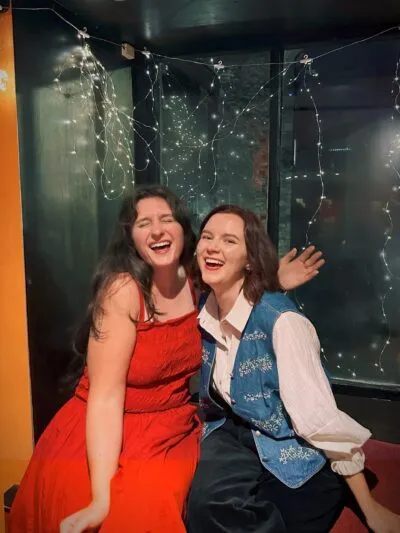
Thanks to Suki, one of our brilliant field contributors, for sharing her words and capturing the atmosphere of the night so thoughtfully. 

If you love live music, enjoy writing and fancy being part of our community, we’d love to hear from you. Our reviewers get the chance to attend gigs, bag themselves a great night out and help shine a light on wider South West artists and venues.

Drop us an email at hello@involvingmusic.com to get involved.